

A room has a different rhythm in the evening. Work is put away, books come out and the corners that felt bright during the day become quiet. Lighting can follow that change, with smaller sources placed where you spend your time.
Start with your evening routine
Think about where you sit, read or talk after sunset. Those are useful places for a smaller light source. A lamp beside a chair can make that seat feel intentional, while a bedside light can help mark the end of the day.
Notice reflections too. A light that looks lovely from across the room might shine directly into your eyes when you sit down. Test the position from the place where you will actually use it.
Build small pools of light
You do not have to light every corner equally. Let a reading spot feel a little brighter and allow quieter areas to stay soft. The contrast can make an ordinary room feel more settled.
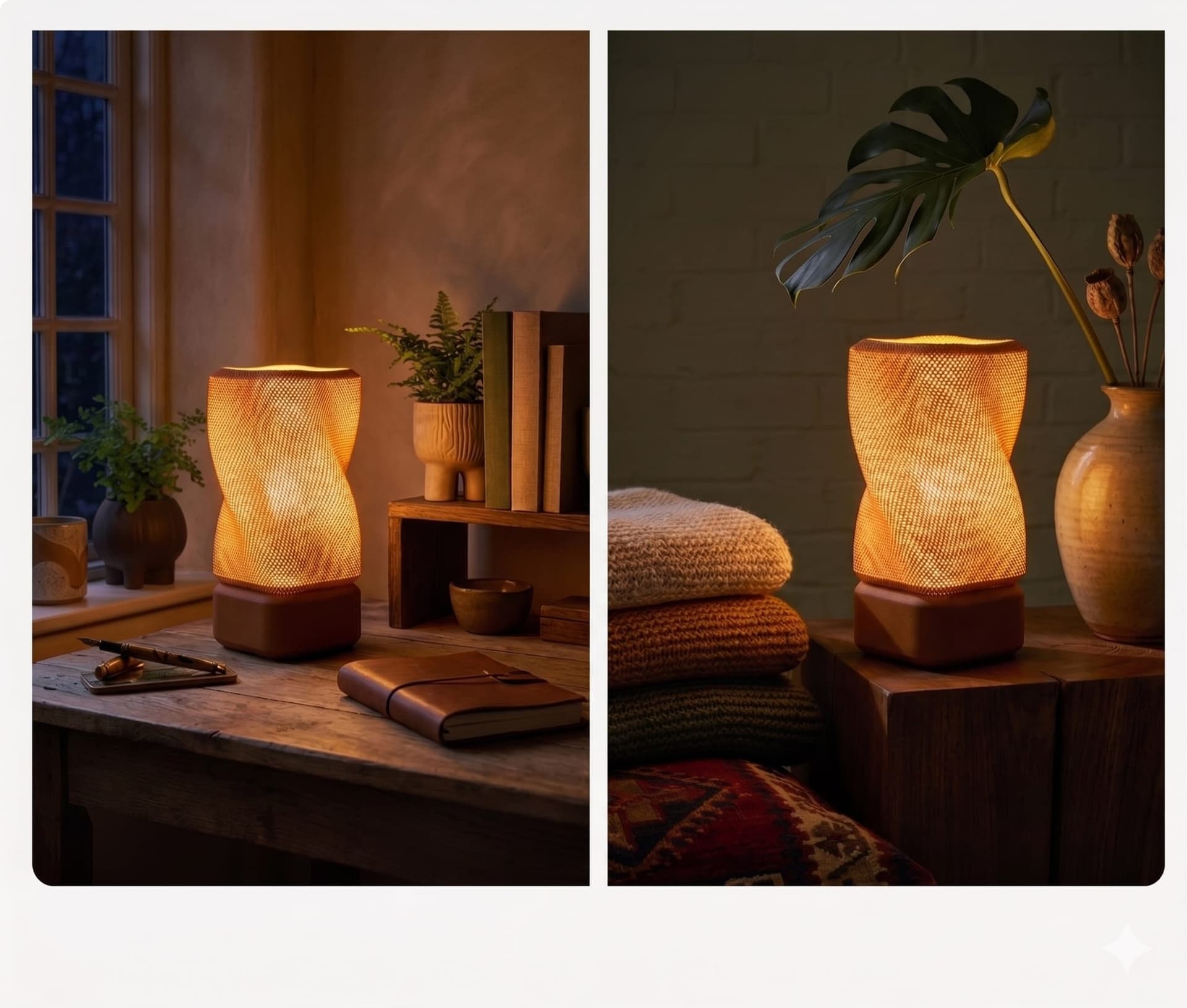
Place a lamp where its light can reach a nearby wall or surface. The way that surface catches the light matters as much as the shape of the lamp itself.
Let the lamp and the surface work together
A bedside table still needs room for a book or a glass of water. Check the lamp footprint, shade height and available space before choosing where it will live.
Keep cords tidy and follow the product's specified bulb and placement instructions. For decorative printed objects, check the material and care information rather than assuming that every piece is suitable around heat.
Light the activity first, then soften the space around it. Follow the care and bulb guidance supplied with each lamp.
A little idea to take with you